20% OFF YOUR FIRST ORDER — SIGN UP FOR EMAIL FREE DOMESTIC SHIPPING ON ALL ORDERS THIRD-PARTY LAB TESTED — COA AVAILABLE TRUSTED USA SOURCE 20% OFF YOUR FIRST ORDER — SIGN UP FOR EMAIL FREE DOMESTIC SHIPPING ON ALL ORDERS THIRD-PARTY LAB TESTED — COA AVAILABLE TRUSTED USA SOURCE

Peptide Research
Insights

Summaries of current science on bioactive peptides — sourced from published literature, written for researchers. Not medical advice.

Peer-Reviewed Sources Mechanism of Action In Vitro & In Vivo Updated Regularly
11
Research Articles
22+
Peptides Covered
100%
Peer-Sourced
Research
Use Only

Science-First Approach

Every article is drawn from published academic and clinical research. We summarize mechanisms, study designs, and findings — giving researchers a concise starting point before diving into primary literature.

All products on this site are for laboratory research use only. Nothing here constitutes medical advice or recommendations for human use.

Independent Research
Articles sourced from
published literature

Research Summaries

5-Amino-1MQ Research Overview: NNMT Inhibition, Metabolic Signaling & Cellular Energy

5-Amino-1MQ Research Overview: NNMT Inhibition, Metabolic Signaling & Cellular Energy

5-Amino-1-methylquinolinium (5-Amino-1MQ) is a small-molecule research compound investigated for its role as a selective inhibitor of nicotinamide N-methyltransferase (NNMT) — an enzyme that plays a central regulatory role in cellular metabolism, energy homeostasis, and adipogenesis. As interest in metabolic signaling research expands, 5-Amino-1MQ has emerged as a significant tool for studying how NNMT activity influences fat cell biology, NAD+ metabolism, and related biochemical pathways.
Epithalon Peptide Research: Telomere Biology, Cellular Aging, and Longevity Studies

Epithalon Peptide Research: Telomere Biology, Cellular Aging, and Longevity Studies

One of the most prominent areas of scientific investigation involving Epithalon research centers on telomere biology. Telomeres are protective nucleotide sequences situated at the ends of chromosomes, functioning as genomic buffers during cellular replication. As cells divide, telomere length progressively shortens — a process widely associated with cellular senescence, organismal aging, and genomic instability in preclinical models.

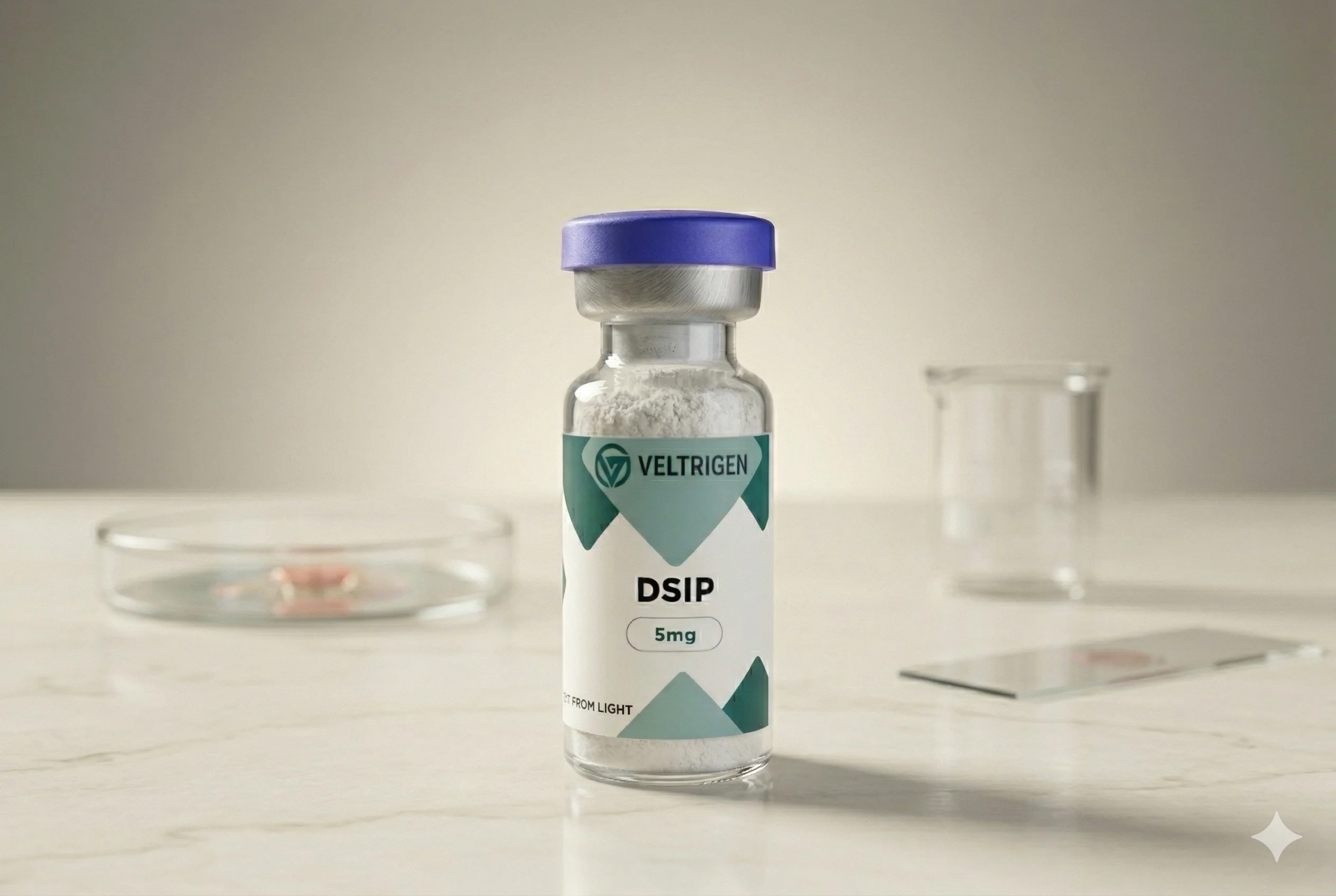
DSIP Uncovered: What Research Reveals About This Neuropeptide's Role in Sleep, Stress & Neuroendocrine Signaling

DSIP Uncovered: What Research Reveals About This Neuropeptide's Role in Sleep, Stress & Neuroendocrine Signaling

Delta Sleep-Inducing Peptide (DSIP) is a naturally occurring nonapeptide — a nine-amino acid sequence — first isolated from the cerebral venous blood of rabbits in 1974. Originally identified for its apparent ability to induce delta-wave sleep patterns in animal models, DSIP has since been studied across a considerably broader range of biological processes. Research has expanded into its role in neuroendocrine regulation, stress response, antioxidant signaling, and circadian rhythm modulation, making it one of the more multifaceted neuropeptides in preclinical investigation.

NAD+ Research Overview: Cellular Energy, Sirtuin Signaling & the Biology of Aging

NAD+ Research Overview: Cellular Energy, Sirtuin Signaling & the Biology of Aging

Nicotinamide adenine dinucleotide (NAD+) is a coenzyme found in every living cell, functioning as a central mediator of cellular energy metabolism, DNA repair, and gene expression regulation. As one of the most extensively studied molecules in biochemistry, NAD+ has become a focal point of research into aging biology, mitochondrial function, and metabolic disease — with interest accelerating significantly over the past decade.

KPV Peptide: The Alpha-MSH Fragment Researchers Are Watching for Gut & Immune Signaling

KPV Peptide: The Alpha-MSH Fragment Researchers Are Watching for Gut & Immune Signaling

KPV (Lys-Pro-Val) is a naturally derived tripeptide composed of lysine, proline, and valine — corresponding to the C-terminal sequence of alpha-melanocyte-stimulating hormone (α-MSH). While α-MSH is well established in immunomodulatory research, KPV has emerged as a compelling standalone subject due to its ability to interact with inflammatory signaling pathways independently of the full parent peptide. Its small size, stability, and receptor selectivity make it a practical and increasingly studied compound in preclinical research.

GHK-Cu: A Peptide with Broad Research Potential

GHK-Cu: A Peptide with Broad Research Potential

GHK-Cu is understood to operate through two primary mechanisms. First, as a copper transport peptide, it facilitates the safe delivery and bioavailability of copper — an essential cofactor for enzymes involved in collagen crosslinking, angiogenesis, and antioxidant defense.

Peptides in 2026: Research Trends, Insights, and What’s Next

Peptides in 2026: Research Trends, Insights, and What’s Next

At Veltrigen, we closely follow global peptide research trends to stay aligned with where science is headed. This article outlines what researchers, laboratories, and informed consumers can realistically expect from peptides in 2026, based on current data, emerging studies, and industry momentum.

Thymosin Beta-4 vs TB-500 – What you need to know going into 2026

Thymosin Beta-4 vs TB-500 – What you need to know going into 2026

In the realm of healing, tissue repair and regenerative-science peptides, two compounds often come up: Thymosin beta-4 (Tβ4) and TB-500. Because TB-500 is derived from Tβ4 and they share overlapping nomenclature, many consumers, researchers and marketers treat them interchangeably. In fact they are not identical molecules and have distinct structural, functional and research implications.

Semax: Exploring the Research Behind a Neuroactive Peptide

Semax: Exploring the Research Behind a Neuroactive Peptide

Semax is a synthetic research peptide that has gained attention for its potential neuroactive properties in experimental settings. Originally developed from a fragment of the adrenocorticotropic hormone (ACTH), Semax has been studied for its influence on neuroplasticity, cognitive processes, and stress-response mechanisms.

GLOW Blend: A Multi-Peptide Formula for Advanced Research

GLOW Blend: A Multi-Peptide Formula for Advanced Research

The GLOW blend combines four well-studied research peptides — GHK-Cu, BPC-157, TB-500, and KPV — into a single formulation designed for laboratory investigation. Each component has been studied for unique biological activities in preclinical models, ranging from cellular repair to inflammation pathways. Together, these peptides provide researchers with a versatile subject for experimental study across multiple systems.

Thymosin Alpha-1: The Immune-Regulating Peptide at the Frontier of Immunology Research

Thymosin Alpha-1: The Immune-Regulating Peptide at the Frontier of Immunology Research

Thymosin Alpha-1 (Tα1) is a naturally occurring 28-amino acid peptide originally isolated from thymosin fraction 5 of the thymus gland. First identified in the 1970s, Tα1 has since become one of the most extensively studied immunomodulatory peptides in preclinical and clinical research. Its primary area of scientific interest lies in its ability to influence T-cell maturation, dendritic cell function, and innate immune signaling — positioning it as a significant research tool in immunology, virology, and oncology laboratories.

Shop Research-Grade Peptides

Every compound listed in our research articles is available in lyophilized form with a third-party COA. For laboratory use only.